Am I Too Old for Dental Implants?

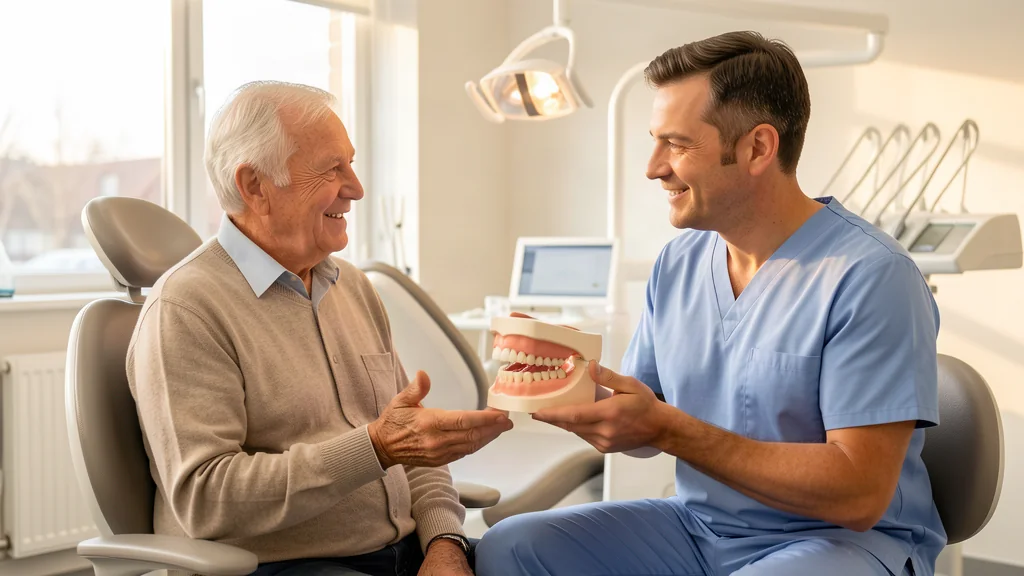
I sometimes meet a patient who has lived with a missing tooth or a loose denture for years because they assume they have missed their chance for dental implants. The question usually comes out quietly: "Am I too old for this?" Age belongs in the conversation, but it is not the first thing I use to decide whether an implant makes sense.
There is no automatic upper age limit for dental implants. I care more about your general health, gum condition, available bone, medications, tobacco use, healing capacity, and the type of replacement you need. A healthy person in their 70s or 80s may be a reasonable candidate, while a younger person with uncontrolled disease or active gum problems may need treatment before an implant is considered.
A dental implant decision starts with your health, goals, bone, and gum condition, not an age cutoff.
A dental implant is a small post placed in the jaw to support a crown, bridge, or denture. The American Academy of Periodontology says a good candidate should be in good general and oral health, have enough jawbone to support the implant, and have healthy gum tissue without periodontal disease. Those conditions do not belong to one age group.
Older adults can have excellent oral health and heal predictably. Younger adults can have risk factors that make treatment less straightforward. I do not promise an outcome from a birth date, and I do not reject a patient because of one. The useful question is whether the proposed treatment fits the person's health, anatomy, goals, and ability to maintain it.
At Village Family Dental in Briarcliff, an implant conversation starts with the reason the tooth is missing and what the patient wants to improve. Replacing one tooth is different from stabilizing a denture or rebuilding a full arch. The examination and imaging help me judge whether an implant belongs in the plan.
• Medical history: I review health conditions that may affect surgery or healing and whether those conditions are well managed.
• Medications: Some prescriptions can affect bleeding, bone, immune response, or the timing of care. Do not stop a medicine on your own.
• Gums and hygiene: Active periodontal disease and heavy plaque need attention because implants depend on healthy surrounding tissue.
• Bone and anatomy: Imaging helps show the height, width, and location of available bone along with nearby structures.
• Bite and restoration: The final crown, bridge, or denture must fit the way the teeth come together and the space that is available.
• Daily habits: Tobacco use, home care, and the ability to return for maintenance all matter.
Bone changes after a tooth is lost, so waiting many years can make the site more complicated. It does not automatically make an implant impossible. The American Academy of Periodontology describes ridge modification and sinus augmentation as procedures that can build bone in selected situations. Whether either is appropriate depends on the location and the amount of support needed.
Some patients can proceed without grafting. Others may need a graft and additional healing time. A different restoration may be safer or more practical for someone else. Imaging is what turns that uncertainty into a real discussion rather than a guess.
An implant evaluation may include a medical and medication review, gum examination, bite assessment, and imaging of the available bone.
A diagnosis on a medical history form is not a simple yes or no. I want to know how well a condition is controlled, which medications are involved, and whether coordination with the patient's physician is needed. Safety may require a modified plan, more information, or choosing a non-surgical option.
Smoking deserves a direct discussion. The Centers for Disease Control and Prevention says smoking weakens the body's ability to fight gum infection and makes damaged gums harder to heal. That matters because implants rely on healthy gum and bone. If you use tobacco, tell your dentist honestly so the risk and timing can be discussed without judgment.
The calendar depends more on the procedure and healing than on age alone. Cleveland Clinic explains that implant treatment may involve placement, a healing phase called osseointegration, and later attachment of the final crown, bridge, or denture. Healing can take several months. Bone grafting, extractions, or a full-arch plan can change the sequence.
I give patients a plan in stages because "getting an implant" is rarely one appointment. Before moving forward, you should understand which parts are surgical, whether a temporary tooth is possible, how many visits are expected, and what happens if the site needs more healing than planned.
Bring enough information to make the visit useful:
• A current medication and supplement list.
• The names of physicians managing major health conditions.
• Questions about chewing, appearance, denture movement, or the tooth you want replaced.
• Any prior implant, extraction, or bone-graft records you have.
• Your preferred timeline and concerns about surgery or recovery.
Possibly. Age by itself is not the deciding factor. The dentist needs to evaluate general health, medications, gums, bone, bite, healing risks, and the proposed restoration.
No single diagnosis should be judged without context. Tell your dentist about osteoporosis and every medication used to treat it. The treatment plan may require more records or coordination with your physician.
Sometimes. Long-term tooth loss can reduce available bone, so imaging is important. Options may include an implant-supported denture, a full-arch restoration, grafting in selected sites, or a non-implant alternative.
No. Implants cannot develop cavities, but plaque can inflame the surrounding gums and supporting bone. Daily cleaning and regular dental visits remain necessary.
I can evaluate the missing tooth or denture, review your health history, and explain the options without assuming that age settles the question. Read about dental implants at Village Family Dental , learn more about my approach to care , or request an appointment at our Briarcliff office.
• American Academy of Periodontology: Dental Implant Procedures
• Cleveland Clinic: Dental Implants
• CDC: Smoking, Gum Disease, and Tooth Loss
Our team of dedicated providers are hear to address your key concerns and help you get the smile of your dreams.


