Can Invisalign Fix a Crossbite?

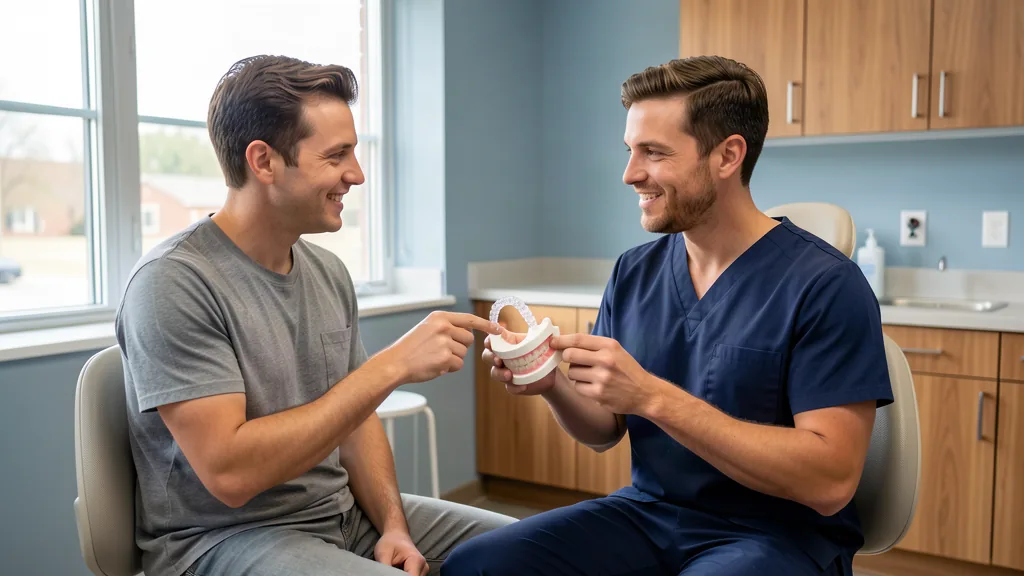
Patients in my Briarcliff office sometimes point to one tooth that sits behind the lower teeth and ask whether Invisalign can bring it forward. Other people have a wider crossbite that affects several back teeth. Those may look similar in the mirror, but they are not the same treatment problem. I want to know which teeth are involved, how the jaws line up, and whether the gums and bone can support the planned movement.
Invisalign can correct many crossbites caused mainly by tooth position. Clear aligners may move one crossed front tooth or guide several teeth into a healthier relationship. A crossbite tied to the width or position of the jaws can be more complex. Some patients need attachments, elastics, expansion, braces, specialist care, or a combination of approaches. An exam and appropriate dental images are needed before anyone can say which option fits.
I look at the entire bite before deciding whether clear aligners can move the crossed teeth predictably.
A crossbite means one or more upper teeth sit inside the lower teeth when you bite down. The American Association of Orthodontists explains that it can affect a single tooth or a group of teeth. A front crossbite involves the front teeth. A posterior crossbite affects teeth farther back on one or both sides.
That location matters. One upper front tooth tucked behind a lower tooth may be a mostly dental problem. A broad posterior crossbite can reflect tooth position, jaw width, or both. I also check whether the lower jaw shifts to one side when the patient closes. A photograph can show the appearance, but it cannot tell me the whole cause.
Invisalign treatment uses a series of custom trays. Each set applies controlled pressure to selected teeth. Small tooth-colored attachments or elastics may be added when the plan needs more grip or a different direction of force. The American Dental Association notes that braces and aligners are commonly used to guide teeth into better positions.
For a tooth-related crossbite, the plan may create room and then move the upper tooth outward, move the lower tooth inward, or coordinate both arches. The sequence has to protect the bite along the way. Moving one tooth without considering where it will land can create a new collision with the opposing tooth.
At Village Family Dental, I do not decide from a smile photo alone. My crossbite evaluation usually includes:
• Which teeth are crossed: One front tooth is a different problem from several back teeth.
• Tooth position versus jaw position: I look for a dental crossbite, a skeletal crossbite, or a combination.
• Available space: Crowding can block the tooth from moving into the arch.
• Gum, root, and bone support: Planned movement has to respect the tissues around each tooth.
• Existing dental work: Crowns, bridges, implants, missing teeth, and large restorations can change the sequence.
• Jaw function: I ask about shifting, soreness, chewing difficulty, and uneven contact.
• Daily wear: Removable trays need consistent use to deliver the planned force.
Aligners can guide selected teeth in a planned sequence, but the trays only work when the diagnosis and daily wear are both right.
A crossbite can involve more than crooked teeth. Cleveland Clinic describes malocclusion as a problem with how the upper and lower teeth align and notes that treatment may involve orthodontics, with surgery reserved for some severe cases. In an adult, a large jaw-width difference may not respond to trays alone. A growing child may have different options because growth can still be guided.
Braces may give better control for certain movements. Some cases need an orthodontist's evaluation or treatment. Active gum disease, untreated decay, unstable restorations, or poor oral hygiene can also delay tooth movement. I would rather address those limits at the beginning than promise that every crossbite belongs in Invisalign.
Not every crossbite causes the same trouble, and treatment is not based on appearance alone. I look for uneven wear, gum irritation, chipped edges, difficulty cleaning, chewing discomfort, or a jaw shift. The AAO notes that bite problems can affect oral function and may contribute to uneven tooth wear or other dental concerns. Whether those risks apply to you depends on the actual contacts in your mouth.
If the bite is stable, healthy, and not damaging tissue, the conversation may be different from a crossbite that is wearing one tooth or pushing the jaw sideways. The useful question is not simply, "Can a tray move this tooth?" It is whether the full plan creates a healthier, more stable bite.
• Notice whether the crossbite involves a front tooth, back teeth, or one whole side.
• Bring your current medication list and tell us about prior orthodontic treatment.
• Mention jaw shifting, clicking, chewing discomfort, or a tooth that feels overloaded.
• Tell me about crowns, implants, bridges, or dental work completed elsewhere.
• Ask how attachments, elastics, review visits, and retainers fit your proposed plan.
You do not need to diagnose the crossbite yourself. A clear description of what you notice helps me focus the exam and explain the tradeoffs in plain language.
It can correct many adult crossbites caused mainly by tooth position. Crossbites tied to jaw width or jaw position may need a different or combined approach. The exam determines which situation applies.
There is no reliable timeline without a treatment plan. The number of teeth involved, crowding, jaw relationship, required attachments or elastics, and daily wear all affect timing.
Possibly. Attachments can help an aligner grip a tooth, while elastics can add force between the upper and lower arches. I recommend them only when the planned movement needs them.
Teeth can shift after orthodontic treatment. Retainers and follow-up care help protect the result. A crossbite influenced by jaw relationships or habits may need a more specific retention plan.
I can examine how your teeth meet and explain which treatment paths make sense. Read about Invisalign at Village Family Dental , learn more about my approach to care , or request an appointment at our Briarcliff office.
• American Association of Orthodontists: Seven Common Types of Bite Problems
• American Dental Association: Orthodontics
• Cleveland Clinic: Malocclusion
Our team of dedicated providers are hear to address your key concerns and help you get the smile of your dreams.


