Why Does My Dental Implant Feel Loose?

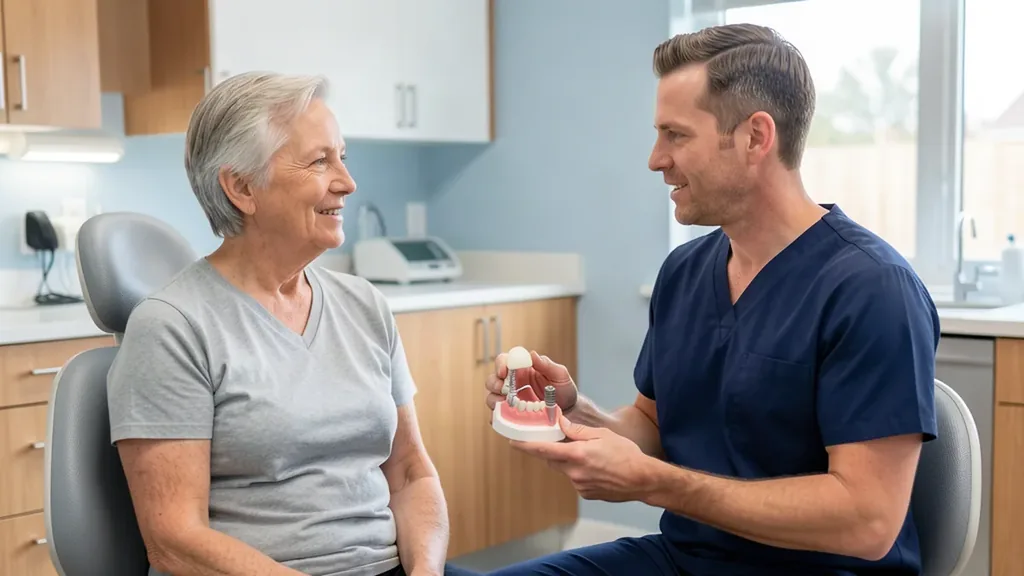
When someone in my Briarcliff office says an implant feels loose, I take it seriously, but I do not assume the implant has failed. A dental implant restoration has several parts. The crown you see, the connector beneath it, or the implant body in the bone can each create a different kind of movement. Those problems do not all need the same repair, so the first job is to find out what is actually loose.
A dental implant should not feel loose. Sometimes only the crown or its connecting screw has loosened, and that may be repairable without removing the implant. Movement of the implant body itself is more serious because a stable implant should be integrated with the surrounding bone. Stop chewing on that side, do not keep wiggling it, and arrange a dental examination. Call sooner if you have increasing pain, swelling, drainage, fever, or facial swelling.
The part that feels loose is not always the implant in the bone. I first identify whether the movement comes from the crown, connector, or implant body.
The U.S. Food and Drug Administration describes an implant system as an implant body in the jaw, an abutment above it, and sometimes an abutment fixation screw. A crown, bridge, or denture then attaches to that foundation. Patients often call the whole assembly an implant, which makes sense, but the distinction matters when something moves.
• The crown can loosen: Cement can release, or a screw-retained crown can develop movement.
• The abutment or screw can loosen: The visible tooth may rock even though the implant body remains stable in the bone.
• The implant body can move: This is less common and more concerning because mobility can mean the implant has not integrated or has lost support.
You usually cannot identify the moving part by pressing on it at home. Repeated testing can stress the connection or irritate the tissue, so leave it alone and let a dentist examine it.
Implant restorations handle the force of biting every day. A connecting screw can loosen, cement can lose its hold, or the porcelain and supporting parts can wear or fracture. A review highlighted by the American Dental Association lists screw loosening and loss of retention among recognized maintenance problems for implant restorations.
A high bite contact, grinding, clenching, or a change in neighboring teeth can place extra force on the restoration. I check the component and the way the upper and lower teeth meet before completing a repair.
Redness, tenderness, bleeding during cleaning, swelling, drainage, or a bad taste can point to inflammation around an implant. The American Academy of Periodontology notes that peri-implant disease can begin in the gum tissue and, if it progresses, damage the bone supporting the implant. Smoking, poor plaque control, diabetes, and a history of gum disease can raise risk, but symptoms still need an individual examination.
The FDA lists looseness of the implant body as a form of implant failure. An exam and dental images help show whether the issue is early healing, infection, bone loss, trauma, or another problem.
• Stop chewing on the implant side, especially hard, sticky, or crunchy foods.
• Do not wiggle the crown with your tongue or fingers.
• Keep the area clean gently unless your dentist has given different instructions.
• Do not use household glue or try to tighten any part yourself.
• If a crown or small part comes out, save it in a clean container and bring it with you.
• Call the office and describe the movement, pain, swelling, bleeding, and when the change started.
Until the area is examined, avoid chewing on it, do not test the movement, and call the dental office for specific guidance.
A loose feeling deserves a prompt call even if it does not hurt. Continuing to chew can damage a part that might otherwise be repairable. Call sooner when the implant was placed recently, the movement followed an injury, or the bite suddenly feels different.
Call the dental office the same day for worsening pain, spreading swelling, pus or drainage, fever, or a crown that is close to coming off. Facial swelling that affects breathing or swallowing needs emergency medical care. These warning signs do not prove implant failure, but they are not symptoms to watch casually at home.
I start by listening to what changed and then examine the entire restoration. Depending on the situation, the visit may include:
• checking whether the crown, abutment, or implant body is moving;
• examining the gums for bleeding, tenderness, swelling, or drainage;
• reviewing dental images for changes around the implant and nearby teeth;
• checking the bite and signs of grinding or overload;
• looking for a damaged screw, worn component, lost cement, or fractured porcelain; and
• reviewing home care, health changes, medications, and tobacco or nicotine use.
Often, the moving part is the restoration rather than the implant body. A dentist may be able to remove the crown, replace or tighten a component, repair damage, and adjust the bite. The exact repair depends on the implant system and the condition of every part.
If the implant body itself is mobile, it may need to be removed so the site can heal, with replacement considered later when appropriate. I review the symptoms, tissues, bone support, implant position, restoration, and your goals before recommending the next step.
It needs prompt dental attention, but not every loose crown is a medical emergency. Avoid chewing on it and call the office. Seek faster care if you have increasing pain, swelling, drainage, fever, or facial swelling.
A dentist may be able to tighten or replace a loose screw when the implant body is stable and the components are not damaged. The crown may need to be removed first, and the bite should be checked before the repair is complete.
A loose crown or connecting screw may move without causing pain. Lack of pain does not show which part is loose, so the area still needs an examination before you keep chewing on it.
No. Household glue is not safe for dental use and can interfere with the proper repair. Save any part that comes out, avoid chewing in the area, and bring the piece to your appointment.
I can check the restoration, implant support, gums, and bite, then explain the next step without guessing. Read about dental implants at Village Family Dental , learn more about my approach to care , or request an appointment at our Briarcliff office.
• U.S. Food and Drug Administration: Dental Implants, What You Should Know
• American Academy of Periodontology: Peri-Implant Diseases
• American Dental Association: Prosthodontic Maintenance and Implant Complications
Our team of dedicated providers are hear to address your key concerns and help you get the smile of your dreams.


