Can Dental Implants Get Cavities?

A patient will sometimes point to an implant crown and ask me, "Can this tooth ever get another cavity?" I like the question because the answer is reassuring, but it comes with an important catch. The implant itself cannot decay. The mouth around it can still have problems, and those problems are much easier to manage when we find them early.
No. A dental implant and its crown cannot get a cavity because they are made from materials such as titanium, ceramic, or porcelain, not natural enamel and dentin. You still need to brush, clean between the teeth, and keep regular dental visits. Plaque can inflame the gums around an implant, neighboring natural teeth can develop decay, and the crown or small connecting parts can wear or loosen.
An implant restoration has manufactured parts rather than natural enamel, but the surrounding gums and bone are still living tissue.
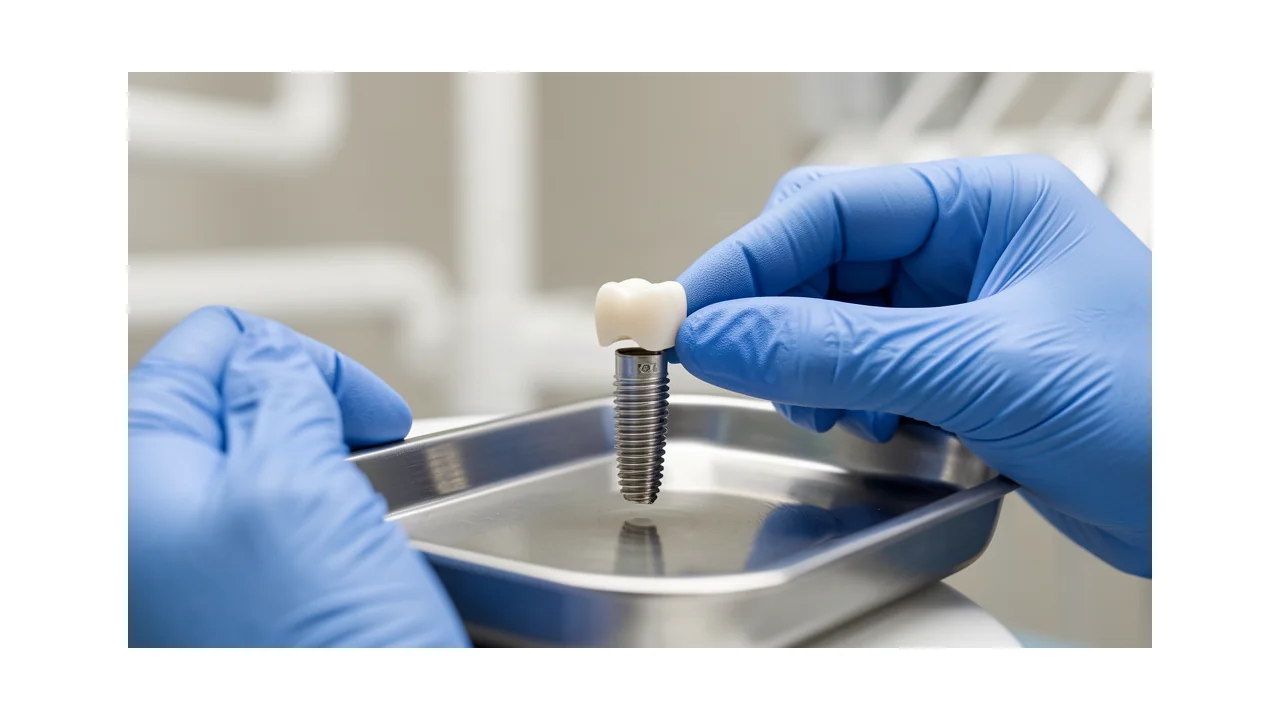
A cavity begins when acids produced by bacteria remove minerals from natural tooth structure. An implant restoration has no enamel or dentin for that process to damage. The American Dental Association describes the implant as a post placed in the jaw, with a replacement tooth made to fit over it. A single-tooth restoration usually has three parts: the implant fixture in the bone, an abutment that connects the pieces, and the visible crown.
None of those manufactured parts can become "decayed" in the way a natural tooth can. That does not make the implant maintenance-free. I tell patients at Village Family Dental in Briarcliff to think of it as a durable replacement that still depends on healthy tissue and a stable bite.
The most important issue is usually not a cavity in the crown. It is what happens at the gumline, under the gum, or in the parts that hold the restoration together.
Plaque can collect around an implant just as it collects around natural teeth. The gum may become red, tender, swollen, or prone to bleeding. If inflammation progresses and the supporting bone is affected, the implant can lose support. That is why bleeding around an implant deserves an exam instead of a wait-and-see approach.
The implant cannot get a cavity, but a natural tooth next to it can. Food and plaque can hide where the implant crown meets the neighboring tooth. Cleaning that contact protects the natural tooth and helps keep the implant area comfortable.
The visible crown can chip or wear. A screw or abutment can loosen. Sometimes patients notice movement, a change in the bite, or a clicking sensation. Cleveland Clinic advises calling a dentist for a loose or wobbly implant, bleeding or swollen gums, fever, or pus around the implant. Do not keep chewing on an implant that feels mobile while hoping it tightens on its own.
Daily brushing and cleaning between teeth help protect the tissue around an implant and the natural teeth beside it.
Call us if you notice a change around an implant, especially one that persists or gets worse. I want to know about:
• Bleeding, swelling, tenderness, or a bad taste near the implant.
• A crown that moves, clicks, chips, or suddenly feels taller when you bite.
• Food trapping that is new or difficult to clean.
• Pain during chewing or pressure around the implant.
• Receding gum tissue or metal becoming visible near the gumline.
• Fever, facial swelling, or drainage, which needs prompt attention.
Those signs do not all mean the implant has failed. A loose crown and an infection in the surrounding tissue are different problems. The exam helps me find the source before recommending a repair.
The basics are familiar, but the details should fit the shape of your restoration. My usual checklist is:
• Brush twice a day with a soft-bristled toothbrush, including the gumline around the implant.
• Clean between the implant and neighboring teeth every day with floss or another device recommended for your restoration.
• Avoid using the crown to crack ice, hard candy, nutshells, or packaging.
• If you clench or grind, ask whether a night guard would help protect the crown and the rest of your teeth.
• Keep the recall schedule we recommend so we can compare the tissue, bite, and stability over time.
Cleveland Clinic notes that implants often last a long time with brushing, flossing, and regular dental visits, while the restoration on top may need replacement at some point. I would rather catch wear in the crown or irritation at the gumline before it turns into a larger repair.
I check whether the crown is stable, how the bite lands, whether food is getting trapped, and how the gum responds to gentle examination. Imaging may be useful when I need to assess the bone or compare the area with an earlier visit. I also look at the natural teeth nearby. The goal is not simply to declare that the implant has no cavity. It is to make sure the whole area is healthy and working comfortably.
No. Porcelain, ceramic, and metal do not develop tooth decay. The crown can still chip, wear, or loosen, and the tissue around it can become inflamed.
Yes. Plaque can irritate the gums around an implant, and more advanced inflammation can affect supporting bone. Bleeding, swelling, tenderness, or drainage should be checked.
The goal is still to remove plaque and food around the gumline, but the best tool depends on the restoration. Ask us to show you the floss, interdental brush, or other method that fits without damaging the tissue.
There is no one interval for every patient. I base the schedule on gum health, home care, medical history, previous bone loss, the type of restoration, and what I see at each visit.
If an implant feels different or the gum around it keeps bleeding, I can examine the area and explain what needs attention. Read about dental implants at Village Family Dental , learn more about my approach to care , or request an appointment at our Briarcliff office.
• American Dental Association: Implants
• Cleveland Clinic: Dental Implants
• American Dental Association: Gum Disease
Our team of dedicated providers are hear to address your key concerns and help you get the smile of your dreams.


